
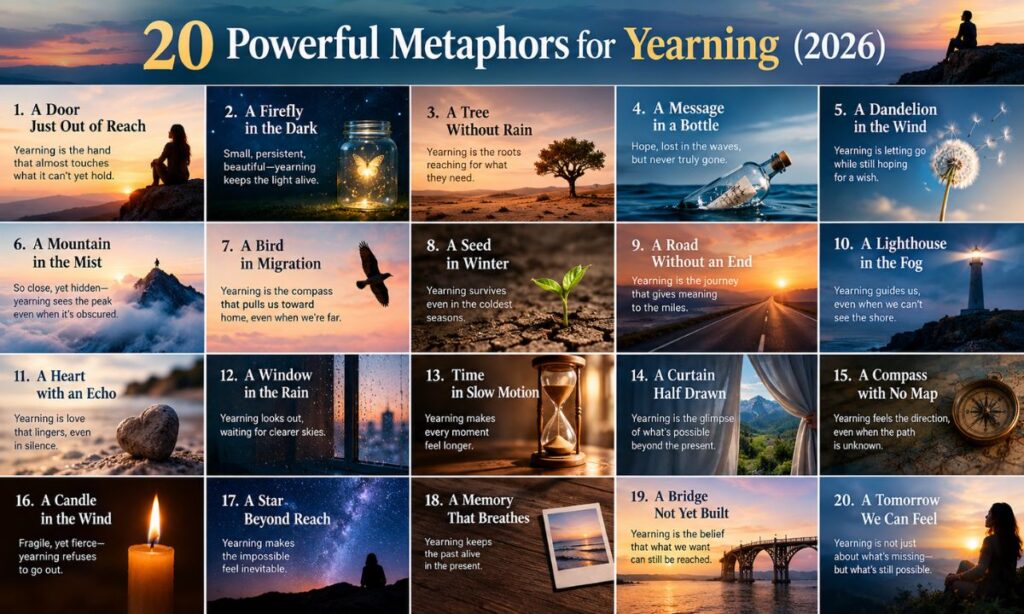
Yearning is one of the deepest feelings a person can have. It is a quiet ache for something or someone that feels out of reach. It can be love, home, a lost dream, or a missing piece of yourself.
Plain words often fail to explain this feeling. That is where metaphors help. A good metaphor gives yearning a shape, a sound, and a picture. It lets readers feel what you mean without long explanations.
This guide shares 20 powerful metaphors for yearning. Each one comes with a clear meaning, a simple example, and tips to use it well. You will also find a table of quick uses, a 15-question quiz with answers, and a short FAQ section at the end.
Why Metaphors Work So Well for Yearning
Yearning is hard to measure. You cannot weigh it or point at it. You can only feel it. A metaphor turns that hidden feeling into something you can see.
When a writer says yearning is “a lantern in the dark,” the reader sees light, night, and hope at once. That is faster and stronger than saying “I feel a deep longing.” The picture does the work.
Here is why these metaphors are so useful:
- They make abstract feelings easy to picture.
- They connect with readers on an emotional level.
- They make poems, stories, and speeches more memorable.
- They help you explain your own emotions to others.
- They add depth to captions, letters, and songs.
| Type of Use | How a Metaphor Helps |
| Poetry | Adds beauty and rhythm |
| Fiction | Shows a character’s inner pain |
| Speeches | Makes ideas stick in memory |
| Captions | Says a lot in few words |
| Love letters | Expresses feelings that are hard to say |
Yearning is a Flame Waiting to Rise

A flame can sit low and quiet. It looks small, but it is alive. With a little air, it can grow into a strong fire. Yearning works the same way. It burns softly inside you until something gives it room to rise.
This metaphor shows that yearning is not weak. It is a hidden strength. The desire is already there. It only waits for the right moment, the right person, or the right chance.
Use this metaphor when the feeling is warm and full of hope. It fits stories about passion, dreams, and second chances.
Example: “Her yearning was a flame waiting to rise, and one kind word was all the air it needed.”
Yearning is an Empty Chair at the Table
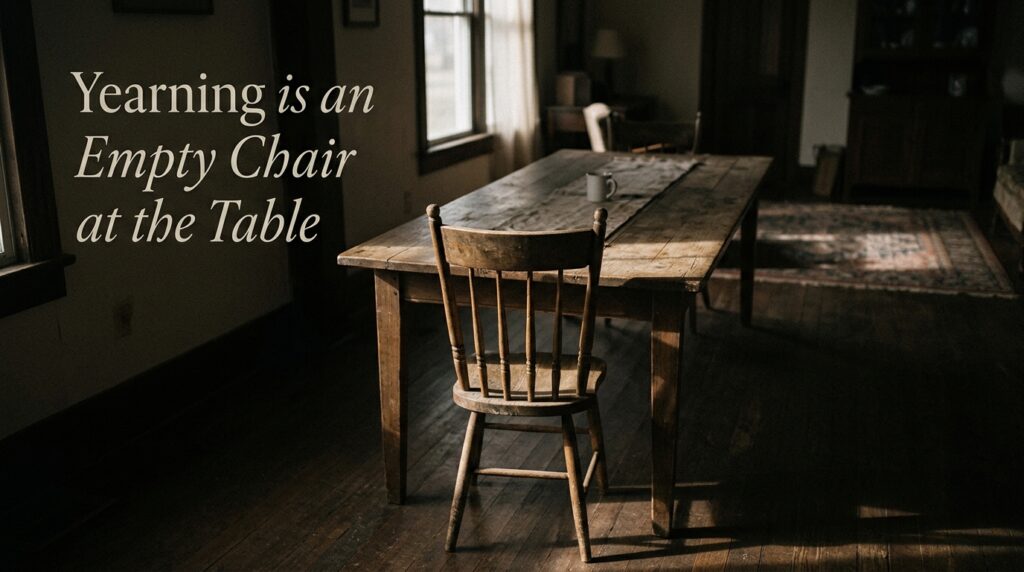
An empty chair says a lot without a single word. Someone should be there, but they are not. The table feels incomplete, and everyone notices the gap.
This metaphor fits grief, distance, and missing loved ones. It shows how absence takes up space. The chair is quiet, yet it feels louder than the people around it.
Writers use this image for family stories, memory pieces, and emotional scenes. It is simple, and that is why it hits hard.
Example: “Every dinner, his yearning sat in the empty chair across from him.”
Yearning is a String Pulled Tight
Picture a string stretched between two points. It hums with tension. One small tug and it could snap. That is how yearning feels when two hearts are far apart.
This metaphor shows pull and strain. You feel drawn toward something, but distance holds you back. The tighter the string, the stronger the longing.
It works well for long-distance love, separation, and waiting. It also hints at connection, because a string joins two ends.
Example: “Miles apart, their yearning was a string pulled tight between two cities.”
Yearning is a Window Facing the Horizon
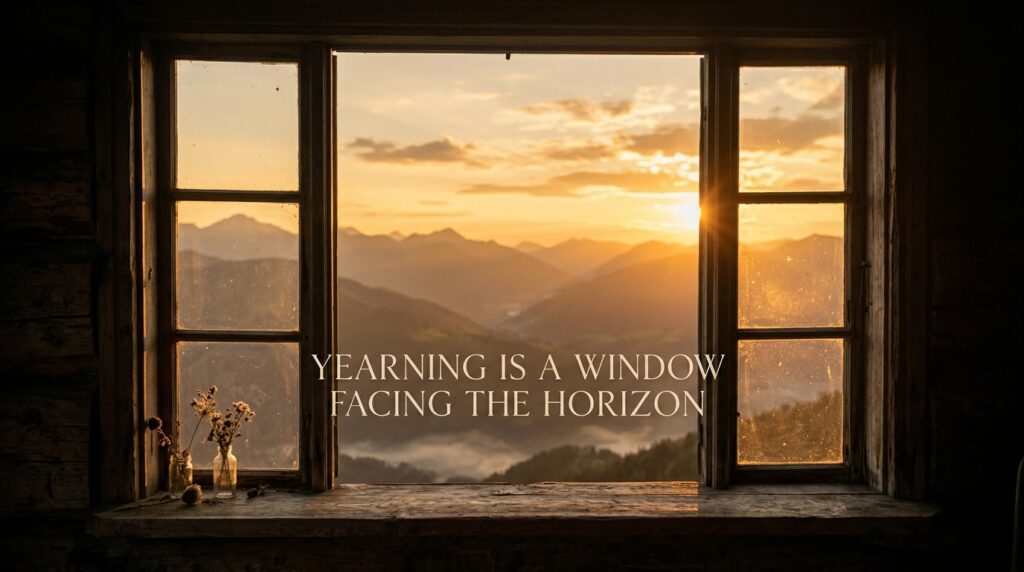
A window lets you look out, but not step through. When it faces the horizon, you see far places you cannot yet reach. You stand still while your heart travels.
This metaphor suits dreamers. It speaks to people who want a bigger life, a new place, or a distant goal. The view is beautiful, yet the distance is real.
Use it for stories about ambition, travel, and big hopes. It carries both wonder and a gentle sadness.
Example: “He spent his evenings at the window, yearning for the horizon beyond it.”
Yearning is a Book with a Missing Page
A good story with a missing page leaves you restless. You want to know what happened. Your mind keeps filling the gap, but nothing feels right.
This metaphor shows yearning as unfinished business. It could be closure, an answer, or a goodbye that never came. The story is mostly there, but one part is lost.
It fits mystery, memory, and past relationships. Readers will understand the ache of “not knowing.”
Example: “Her past was a book with a missing page, and she yearned to read it.”
Yearning is a River Searching for the Sea
A river never rests. It bends, falls, and flows until it finds the sea. Its whole journey is driven by one pull.
This metaphor presents yearning as a natural force. It is not random. It has direction and purpose. Even when the path is long, the river keeps moving.
Use it for stories of searching, belonging, and destiny. It also carries peace, because the river will arrive in time.
Example: “Like a river searching for the sea, his heart kept moving toward home.”
Yearning is a Lantern Held in the Dark
A lantern does not remove the night. It only lights a small circle around you. Still, that small light gives courage to keep walking.
This metaphor shows yearning as hope in hard times. Even when things look dark, the longing guides you forward. It gives you a reason to continue.
It fits stories of struggle, recovery, and faith. It is gentle, warm, and uplifting.
Example: “In the long night of loss, her yearning was a lantern held steady in the dark.”
See More : Stared vs Starred: Meaning & Difference (2026)
Yearning is a Door Half-Open
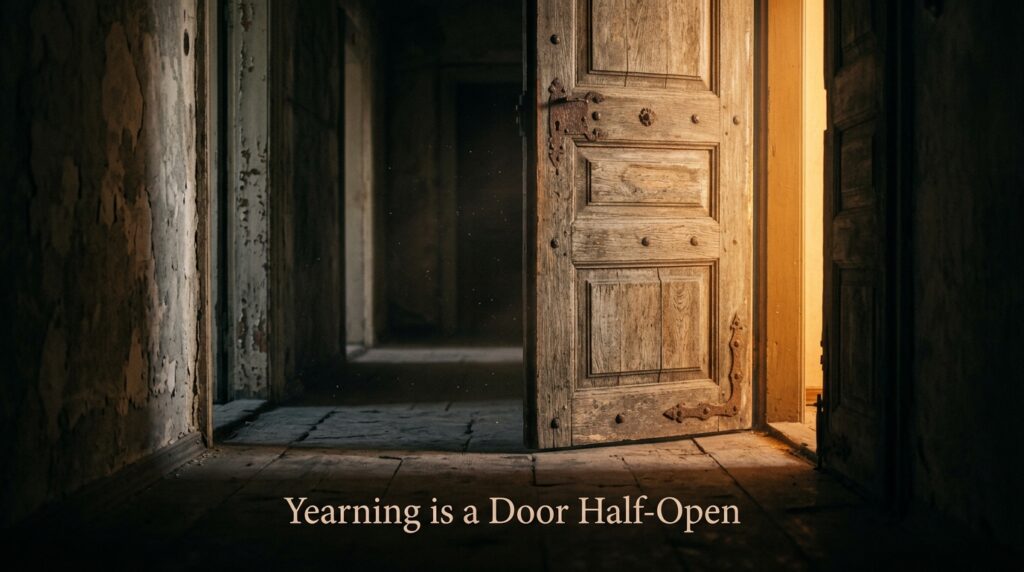
A half-open door sends mixed signals. It is not closed, but it is not fully open either. You wonder if you should walk in or wait.
This metaphor captures uncertainty. Yearning often lives in the space between “maybe” and “not yet.” The chance is real, but nothing is promised.
Use it for new romances, unfinished talks, and hesitant hearts. It suits moments when someone almost speaks but does not.
Example: “Their friendship was a door half-open, and he yearned to push it wide.”
Yearning is a Song Stuck in the Heart
Some songs repeat in your mind for days. You hum them without noticing. They follow you from room to room.
This metaphor shows that yearning is persistent. It plays quietly in the background of daily life. You may smile and talk, but the melody never fully stops.
It works well for lyrical writing and emotional storytelling. It also suggests that the feeling has a certain beauty, even when it hurts.
Example: “His yearning was a song stuck in the heart, soft but never silent.”
Yearning is a Kite Pulled by the Wind
A kite wants to rise. The wind lifts it higher, yet the string holds it down. It dances between freedom and limits.
This metaphor shows yearning as a mix of desire and restraint. You feel the pull toward something bigger, but something keeps you grounded. Fear, duty, or timing may hold the string.
Use it for coming-of-age stories and tales of personal growth. It carries energy and movement.
Example: “Her yearning was a kite pulled by the wind, tugging against the small town that held her.”
Yearning is a Garden Waiting for Rain
A garden may be ready with seeds and soil. But without rain, nothing grows. It can only wait and hope for the sky to change.
This metaphor shows patient yearning. You have prepared your heart, yet something essential is missing. You trust that it will come in time.
It suits stories of healing, love, and long waiting. It brings a calm and hopeful tone.
Example: “His heart was a garden waiting for rain, and his yearning was the thirst.”
Yearning is a Bridge Reaching Across Space
A bridge connects two sides that would stay apart without it. It does not close the gap. It simply crosses it.
This metaphor shows yearning as the effort to connect. You reach out toward someone or something far away. Even if you do not arrive, the reach itself matters.
It fits stories about reconciliation, distance, and cultural gaps. It shows that longing can be active, not just sad.
Example: “Her letters were a bridge, and her yearning reached across the ocean.”
Yearning is a Clock That Ticks Too Slowly
When you wait for something you love, time stretches. Minutes feel like hours. The clock seems to mock you.
This metaphor captures the pain of waiting. It shows how yearning changes our sense of time. Everything slows down while your heart rushes ahead.
Use it for stories about reunions, deadlines, and anticipation. It adds tension and relatable emotion.
Example: “Waiting for his call, her yearning was a clock that ticked too slowly.”
Yearning is a Bird Searching for Its Nest
A bird far from its nest feels uneasy. It flies, circles, and looks for a familiar place. Home is more than a spot. It is safe and belonging.
This metaphor speaks to homesickness and the need to belong. It suits migrants, travelers, and anyone who has felt out of place.
It is soft and tender. It reminds readers that yearning often points toward home.
Example: “Far from his village, he was a bird searching for its nest.”
Yearning is a Candle Missing Its Match
A candle holds light inside it. But without a match, it stays dark. The potential is there, yet nothing sparks it.
This metaphor shows yearning as unused potential. You may have talent, love, or passion waiting for a spark. Something small is missing.
Use it for stories about untapped dreams and lonely hearts. It is quiet, and it leaves room for hope.
Example: “She felt like a candle missing its match, full of light with no way to show it.”
Yearning is a Road That Ends Too Soon
A road that stops suddenly leaves you stranded. You expected more miles. You wanted to keep going.
This metaphor fits lost chances and endings that come too early. It could be a relationship, a career, or a life. The path was good, and it ended before you were ready.
It carries sadness and unfinished wishes. Use it with care in emotional scenes.
Example: “Their story was a road that ended too soon, and she still yearned for the next mile.”
Yearning is a Whisper Looking for an Answer
A whisper is soft and careful. It is not demanding. It hopes someone will hear it and respond.
This metaphor shows yearning as a quiet call. You may not say your feelings aloud, but they reach out anyway. You wait for a reply from a person, the universe, or fate.
It suits shy love, silent prayers, and hidden wishes. It feels intimate and gentle.
Example: “His yearning was a whisper looking for an answer.”
Yearning is a Seed Wanting to Break the Soil
A seed lives in darkness. It pushes upward, slowly and bravely. It wants the sun, even before it knows what the sun is.
This metaphor shows yearning as growth. It is the force that pushes you toward change. It starts small and hidden, but it is full of life.
Use it for stories of ambition, healing, and new beginnings. It is hopeful and strong.
Example: “Her yearning was a seed wanting to break the soil and find the light.”
Yearning is a Footstep Echoing in an Empty Hall
In a large empty hall, every step echoes. The sound returns to you, and no one else answers. It makes the space feel bigger and lonelier.
This metaphor captures deep loneliness. You call out into emptiness, and only your own sound returns. It fits stories about loss, isolation, and memory.
It is dramatic and moody. It works well in poetry and dark fiction.
Example: “His yearning was a footsteps echoing in an empty hall.”
Yearning is a Ship Waiting for the Tide
A ship may be ready to sail. But if the tide is low, it cannot move. It must wait for the water to rise.
This metaphor shows yearning tied to timing. You are ready, but the world is not. Patience becomes part of the longing.
Use it for stories about waiting, hope, and the right moment. It carries calm and quiet strength.
Example: “She was a ship waiting for the tide, sure that her time would come.”
Quick Guide: Which Metaphor Fits Which Feeling
Not every metaphor suits every mood. Use this table to choose the right one fast.
| Metaphor | Best For | Tone |
| Flame Waiting to Rise | Passion and hope | Warm |
| Empty Chair | Grief and absence | Sad |
| String Pulled Tight | Long-distance love | Tense |
| Window Facing the Horizon | Dreams and travel | Wistful |
| Book with a Missing Page | Closure and mystery | Curious |
| River Searching for the Sea | Destiny and belonging | Calm |
| Lantern in the Dark | Hope in hard times | Uplifting |
| Door Half-Open | Uncertainty | Hesitant |
| Song Stuck in the Heart | Lingering feelings | Soft |
| Kite Pulled by the Wind | Freedom and restraint | Energetic |
| Garden Waiting for Rain | Patient hope | Gentle |
| Bridge Across Space | Reconnection | Hopeful |
| Clock Ticking Slowly | Waiting | Anxious |
| Bird Searching for Its Nest | Homesickness | Tender |
| Candle Missing Its Match | Untapped potential | Quiet |
| Road That Ends Too Soon | Lost chances | Sad |
| Whisper Seeking an Answer | Silent wishes | Intimate |
| Seed Breaking the Soil | Growth and change | Hopeful |
| Footstep in an Empty Hall | Loneliness | Dark |
| Ship Waiting for the Tide | Timing and patience | Steady |
Tips for Using Yearning Metaphors in Your Writing
A good metaphor should feel natural. It should not look forced. Follow these simple tips to get the best results.
- Pick one metaphor per scene. Too many images confuse the reader.
- Match the mood. A dark image does not fit a joyful moment.
- Keep it simple. Short, clear pictures work best.
- Show, do not explain. Let the image speak for itself.
- Make it personal. Add small details from your own story.
You can also mix a metaphor with action. For example, instead of saying “she felt a string pulled tight,” show her checking her phone again and again. The image and the action support each other.
Exercise: 15 MCQs (With Answers Below)
Test your understanding with this short quiz. Read each question and pick the best answer. Check your results in the answer section below.
Multiple-Choice Questions
1. Which metaphor shows yearning as hope during hard times?
A. A clock that ticks too slowly
B. A lantern held in the dark
C. A road that ends too soon
D. A footstep in an empty hall
2. “An empty chair at the table” mostly represents:
A. Joy
B. Anger
C. Absence
D. Success
3. Which metaphor best fits long-distance love?
A. A string pulled tight
B. A seed in soil
C. A candle with a match
D. A garden in bloom
4. A window facing the horizon suggests:
A. Fear of the past
B. Dreams of faraway places
C. Anger at home
D. A closed mind
5. Which metaphor shows yearning as unfinished closure?
A. A bird in the sky
B. A book with a missing page
C. A kite in the wind
D. A river in flood
6. “A river searching for the sea” shows yearning as:
A. A random wish
B. A natural, steady pull
C. A sudden fear
D. A broken promise
7. A door half-open mainly shows:
A. Certainty
B. Anger
C. Uncertainty
D. Victory
8. Which metaphor links yearning with homesickness?
A. A bird searching for its nest
B. A flame in the wind
C. A bridge in the fog
D. A clock on the wall
9. A kite pulled by the wind shows a mix of:
A. Desire and restraint
B. Fear and joy
C. Anger and peace
D. Wealth and loss
10. Which metaphor stresses slow, painful waiting?
A. A song in the heart
B. A clock that ticks too slowly
C. A seed in the soil
D. A lantern in the dark
11. A garden waiting for rain shows:
A. Impatience
B. Patient hope
C. Total despair
D. Pride
12. Which metaphor shows yearning as growth?
A. A seed wanting to break the soil
B. A road that ends too soon
C. An empty chair
D. A footstep in a hall
13. “A footstep echoing in an empty hall” mostly shows:
A. Excitement
B. Loneliness
C. Courage
D. Celebration
14. A ship waiting for the tide is about:
A. Anger
B. Timing and patience
C. Greed
D. Surprise
15. Which metaphor shows yearning as a quiet, soft call?
A. A whisper looking for an answer
B. A flame in a storm
C. A string pulled tight
D. A road without end
Answers
| Question | Answer | Short Reason |
| 1 | B | A lantern gives light and hope in the dark |
| 2 | C | An empty chair shows someone is missing |
| 3 | A | A tight string joins two distant ends |
| 4 | B | The horizon stands for far-off dreams |
| 5 | B | A missing page means the story is unfinished |
| 6 | B | A river flows toward the sea naturally |
| 7 | C | Half-open means neither yes nor no |
| 8 | A | A bird wants its home |
| 9 | A | The kite wants to rise but is held by a string |
| 10 | B | The clock moves too slowly for the waiting heart |
| 11 | B | The garden waits calmly for rain |
| 12 | A | A seed pushes upward and grows |
| 13 | B | The echo shows emptiness and isolation |
| 14 | B | The ship must wait for the right moment |
| 15 | A | A whisper is soft and hopes for a reply |
Frequently Asked Questions
What is a metaphor for yearning?
A metaphor for yearning compares the feeling to a picture, like a lantern in the dark or a river searching for the sea. It helps readers feel the longing.
What is the best metaphor for yearning?
There is no single best one. “A string pulled tight” suits love, and “a lantern in the dark” suits hope. Choose the one that fits your mood.
What does yearning mean in simple words?
Yearning means a deep, strong wish for something or someone. It often comes with a soft ache because the thing wanted feels far away.
How is yearning different from longing?
They are very close in meaning. Yearning is often deeper and more emotional, and it usually carries a sense of pain or intense desire.
How can I use yearning metaphors in writing?
Pick one clear image, match it to the mood, and keep it short. Show it through small actions and details instead of long explanations.
Which metaphor works best for love poems?
“A string pulled tight,” “a flame waiting to rise,” and “a bridge reaching across space” all work well for love poems.
Why do writers use metaphors for emotions?
Metaphors turn hidden feelings into clear pictures. They make emotions easier to understand, easier to remember, and more powerful for readers.
Final Thoughts
Yearning is a feeling everyone knows, yet few can explain. Metaphors give it a face. A flame, a lantern, a bridge, or a bird can say in one image what a page of words cannot. Each of the 20 metaphors in this guide shows a different side of longing, from sorrow to hope.
Use these images in your poems, stories, captions, and letters. Pick the one that fits your mood, keep it simple, and let it breathe. When you describe yearning with a fresh picture, your readers will not just read it. They will feel it.

Reyansh is a passionate English language and grammar writer who enjoys making grammar, spelling, vocabulary, and writing concepts simple and easy to understand. With a focus on clear explanations and practical examples, Reyansh creates helpful content for students, writers, and everyday English learners. His goal is to make learning English more enjoyable, useful, and accessible to everyone.