
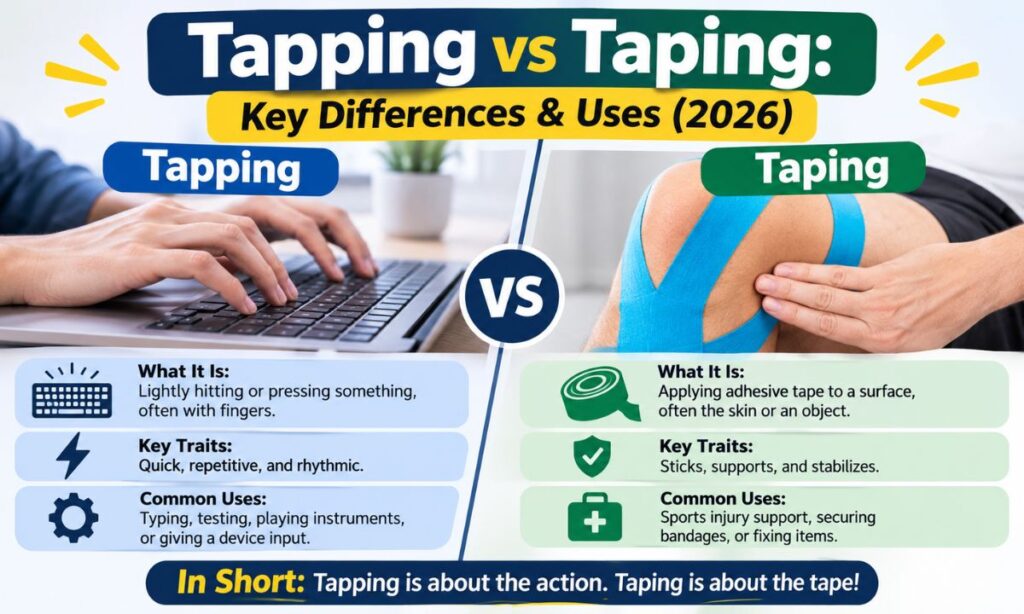
Tapping and taping look almost the same on paper, but they mean very different things. Tapping is about hitting, touching, or cutting threads. Taping is about sticking tape on something.
This guide explains both words in plain English. You will see meanings, examples, uses in sports, therapy, and repair work, plus safety tips and common myths.
What Is Tapping?
Tapping comes from the verb “tap.” It means to hit lightly, touch gently, or use a tool called a tap to cut threads inside a hole. The word has a few meanings, depending on the setting.
In daily life, you tap a screen, tap a table, or tap a friend on the shoulder. In wellness, tapping often means EFT. In workshops, tapping means making threads inside metal or plastic.
Common Areas Where Tapping Is Used
Tapping shows up in many fields. Here are the most common ones:
- Mental wellness and stress relief
- Machine shops and metal work
- Massage and physical therapy
- Music, such as finger tapping on a guitar
- Phone and tablet use
- Plumbing and pipe work
Types of Tapping
Three types of tapping are worth knowing. Each one has a different goal and method.
Emotional Freedom Technique (EFT) Tapping

EFT tapping uses light finger taps on certain points of the body. People use it to calm stress, worry, and tension. It is often called psychological acupressure.
Industrial Thread Tapping

Thread tapping cuts or forms threads inside a drilled hole. A screw or bolt can then fit into that hole. It is a basic job in machining and repair.
Percussive and Massage Tapping
This type uses quick, rhythmic taps with the fingertips or the edge of the hand. Massage therapists call it tapotement. It can wake up muscles and boost blood flow in the area.
How EFT Tapping Works
You pick one problem, such as fear of public speaking. You rate how strong it feels from 0 to 10. Then you say a setup phrase while tapping a point on the hand.
Next, you tap a series of points with two fingers. Common points include the eyebrow, the side of the eye, under the eye, under the nose, the chin, the collarbone, under the arm, and the top of the head. You repeat a short reminder phrase at each point.
After one or two rounds, you rate the feeling again. Many people feel calmer. Researchers think the mix of touch, slow breathing, and focused attention may lower stress signals in the body. The science is still growing, so treat it as a support tool.
Tapping in Manufacturing and Mechanical Work
In a shop, tapping means cutting a thread inside a hole. A hand tap or a machine tap does the cutting. The tap looks like a small bolt with sharp grooves.
The process is simple. First, drill a hole of the right size. Then turn the tap into the hole slowly with cutting oil. The tap carves the thread as it moves forward.
Important Factors in Mechanical Tapping
Good tapping depends on a few key details:
- Correct drill size for the thread
- Sharp, clean tap
- Right cutting fluid
- Slow, steady speed
- Straight alignment with the hole
- Backing the tap out often to clear chips
Common Materials That Require Tapping
| Material | Tapping Difficulty | Quick Note |
| Aluminum | Easy | Use oil to avoid sticking |
| Brass | Easy | Cuts cleanly |
| Mild steel | Medium | Needs good cutting fluid |
| Stainless steel | Hard | Go slow, use strong taps |
| Cast iron | Medium | Cut dry or with light oil |
| Plastic | Easy | Avoid too much force |
Benefits of Tapping
Tapping helps in both personal and technical settings. The benefits depend on the type you use.
Emotional and Therapeutic Benefits
EFT tapping may help you feel calmer within minutes. It is cheap, simple, and easy to learn. You can do it at home, at work, or in a parked car.
Many users say it helps them manage worry, stress, and sleep trouble. It does not replace therapy or medical care. It works best as a self-help habit alongside proper support.
Mechanical Benefits
Thread tapping lets you join parts without welding. You can remove and replace bolts as needed. It also saves money, since you can repair damaged threads instead of buying new parts.
- Strong, reusable connections
- Easy repairs
- Clean, precise fit
- Works on many materials
Common Tapping Mistakes
Beginners often make the same errors. Knowing them early saves time and frustration.
EFT Tapping Mistakes
- Tapping on a vague problem instead of a clear one
- Skipping the setup phrase
- Rushing through the points
- Expecting full relief after one try
- Ignoring serious trauma that needs a professional
Industrial Tapping Mistakes
- Using the wrong drill size
- Forcing the tap when it gets stiff
- Skipping cutting oil
- Tapping at a crooked angle
- Not clearing chips, which can snap the tap
A broken tap inside a hole is hard to remove. Slow and steady always wins.
What Is Taping?
Taping means covering, wrapping, or sticking something with tape. It comes from the verb “tape.” You can tape a box, tape an ankle, or tape a wire.
Taping is about support, protection, sealing, or holding things together. It can happen on the body, on a wall, or on an electrical wire.
Types of Taping
Many kinds of tape exist. Each one serves a different job. Picking the wrong one can cause weak results or even harm.
Athletic Taping
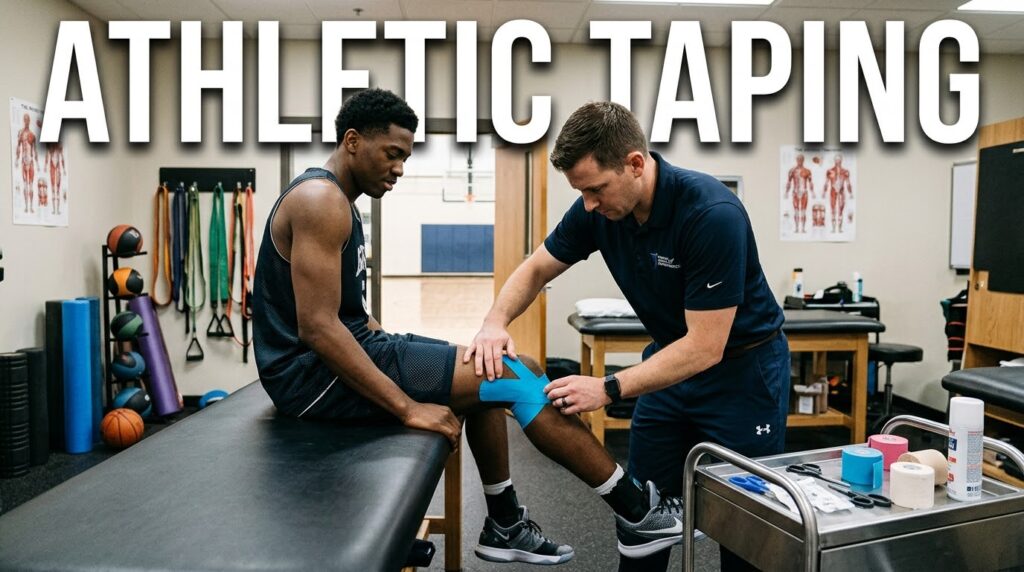
Athletes wrap rigid tape around joints such as ankles, wrists, and fingers. The goal is to limit risky movement and give extra stability during play.
Kinesiology Taping
Kinesiology tape is stretchy and thin. It is placed on skin over muscles or joints. It is popular with runners, gym users, and physical therapy patients.
Medical Taping
Medical tape holds bandages, tubes, and dressings in place. It is made to be gentle on skin and safe for short or long use.
See More : Forteen vs Fourteen
Electrical Taping

Electrical tape covers and insulates wires. It is usually made of vinyl and resists heat, moisture, and electric current to a set limit.
Painter’s and Masking Tape
These tapes protect surfaces during painting. They peel off cleanly when used right. Painter’s tape is gentler than regular masking tape.
Athletic and Kinesiology Taping Explained
Both tapes go on the skin, but they act in different ways. One restricts movement. The other supports movement while letting you stay flexible.
Athletic Tape vs Kinesiology Tape
| Feature | Athletic Tape | Kinesiology Tape |
| Stretch | Little to none | High |
| Main goal | Limit joint motion | Support muscle and skin feel |
| Wear time | Short, during activity | Several days |
| Common use | Ankle and wrist support | Shoulder, knee, back |
| Skin feel | Firm and tight | Light and flexible |
Medical Taping Applications
Medical tape is a daily tool in clinics and homes. It keeps dressings steady and protects wounds from dirt. Nurses and caregivers choose the tape by skin type and wear time.
Common Medical Tape Types
- Paper tape for sensitive or older skin
- Cloth tape for strong hold
- Silicone tape for fragile skin
- Clear film tape for visible wound checks
- Waterproof tape for showers
Situations That Require Medical Taping
- Holding a wound dressing in place
- Securing an IV line or tube
- Wrapping a sprained finger to a neighbor finger
- Protecting a blister
- Keeping a splint steady
Industrial and Household Taping
Taping is common in factories and homes. It seals boxes, covers wires, marks floors, and fixes quick problems. Each job needs a specific tape.
Common Household Tapes
| Tape Type | Best Use | Avoid Using It For |
| Duct tape | Quick repairs, bundling | Sealing real heating ducts |
| Masking tape | Light labeling, painting | Long-term outdoor use |
| Packing tape | Sealing boxes | Skin or walls |
| Electrical tape | Insulating wires | Holding heavy items |
| Double-sided tape | Mounting light items | Heavy loads |
| Foil tape | Heating and cooling ducts | Skin contact |
Benefits of Taping
Taping is cheap, fast, and flexible. One roll can solve many small problems. In sports and medicine, it also adds comfort and confidence.
Major Benefits of Taping
- Adds support to joints
- Protects skin and wounds
- Holds items in place
- Insulates and protects wires
- Saves time on small repairs
- Easy to find and use
Common Taping Mistakes
Most taping errors come from rushing or using the wrong tape. A few simple habits can prevent them.
Frequent Athletic Taping Errors
- Wrapping too tight, which can cut off blood flow
- Taping over wet, oily, or hairy skin
- Leaving tape on too long
- Using the wrong tape type
- Skipping a skin check after removal
Dangerous Household Taping Mistakes
- Using duct tape on real air ducts
- Wrapping live wires with the power on
- Using cheap tape on high-heat parts
- Covering gas or fuel leaks with tape
- Leaving old tape residue on walls
Tapping vs Taping: Key Differences
The main difference is action. Tapping is about striking, touching, or threading. Taping is about sticking tape on something.
| Point | Tapping | Taping |
| Root verb | Tap | Tape |
| Core action | Touch, hit, or cut threads | Wrap or stick tape |
| Spelling | Double “p” | Single “p” |
| Common fields | EFT, machining, massage | Sports, medicine, repairs |
| Tools | Fingers, taps, dies | Tape rolls, scissors |
| Goal | Calm, thread, or stimulate | Support, seal, or protect |
A quick memory trick helps. “Tapping” has two p’s, like two quick finger hits. “Taping” has one p, like one long strip of tape.
Taping vs Tapping
People often flip the order and search “taping vs tapping.” The meaning stays the same. Taping refers to tape, and tapping refers to light hits or thread cutting.
Searching in either order leads to the same answer. The key is knowing which action you mean.
Tapped vs Taped
These are the past forms of each verb. “Tapped” comes from tap. “Taped” comes from tape.
- She tapped the table twice.
- He tapped a thread into the steel plate.
- The nurse taped the bandage down.
- The coach taped his ankle before the game.
Notice the spelling rule. When a short vowel comes before the final letter, the consonant doubles. “Tap” becomes “tapped.” When the word ends in a silent “e,” you just add “d.” “Tape” becomes “taped.”
Tapping or Taping
Choose by asking one question. Are you touching or using tape?
If a tap or a finger hit is involved, use “tapping.” If a roll, strip, or wrap of tape is involved, use “taping.” Mixing them up can change the whole meaning of a sentence.
For example, “I am taping my wrist” means you are wrapping it with tape. “I am tapping my wrist” means you are touching it lightly.
Tapping vs Taping
Here is the plain version in one place. Tapping is a motion or a process. Taping is a material-based action.
Tapping can calm your mind, wake up a muscle, or cut a thread. Taping can hold a joint, seal a box, or cover a wire. They share almost the same letters, but their jobs do not overlap.
Tapping vs Taping Examples
Real examples make the difference clear.
Tapping examples:
- A therapist teaches a client EFT tapping for stress.
- A machinist is tapping an M6 hole in an aluminum block.
- A masseuse uses tapping on the back to loosen tight muscles.
- You tap a phone screen to open an app.
Taping examples:
- A volleyball player is taping her fingers before a match.
- A runner uses kinesiology tape on his knee.
- An electrician is taping a joint between two wires.
- A painter is taping window edges before painting.
Tapping vs Taping vs Tape
“Tape” is the base word. It can be a noun or a verb. As a noun, it is the sticky material. As a verb, it means to attach or wrap with that material.
| Word | Part of Speech | Meaning | Example |
| Tape | Noun or verb | The material, or to stick it | “Pass me the tape.” |
| Taping | Verb form | The act of using tape | “He is taping the box.” |
| Tapping | Verb form of tap | Light hits or thread cutting | “She is tapping the glass.” |
So tape is the item, taping is the action with that item, and tapping is a separate action with no tape at all.
Tapping vs Taping Meaning
Tapping means to strike lightly, touch with the fingers, or cut an internal thread. It can also mean using a tap point in EFT.
Taping means to attach, wrap, or cover something using tape. It can also mean recording on tape in older settings, such as taping a TV show. Today, that second meaning is rare.
Tapping vs Taping in Sports Medicine
Sports medicine uses both. They serve different goals, so athletes often combine them with other care.
When Athletes Use Tapping
Athletes use EFT tapping to handle nerves before games. Some also use light percussive tapping or massage tools to warm up muscles. These methods help with focus and feel.
When Athletes Use Taping
Athletes use taping to protect weak or injured joints. It adds stability during hard movement. Many teams tape ankles and wrists before every match.
Real-World Sports Examples
- A sprinter taps his thighs to wake up muscles before a race.
- A gymnast tapes her wrists for extra support.
- A golfer uses EFT to calm pressure before a final putt.
- A rugby player tapes his fingers to avoid sprains.
Case Study: Basketball Ankle Support
A guard on a college team had a history of rolled ankles. His trainer applied rigid athletic tape in a figure-eight pattern before every game. The tape limited sideways movement while he could still jump and run.
He also did balance exercises during the week. Over the season, he had fewer ankle problems. The tape helped, but the exercises built lasting strength. Taping works best with training, not instead of it.
Case Study: EFT Before Competition
A young swimmer felt shaky before big meets. Her coach taught her a short EFT routine. She tapped for about three minutes while calmly repeating a simple phrase about doing her best.
She said her nerves dropped and her breathing felt steadier. Results vary from person to person. Still, the routine gave her a clear, repeatable habit before racing.
Tapping vs Taping in Physical Therapy
Physical therapists use both ideas in different ways. One works with touch and rhythm. The other works with support and feedback on the skin.
How Tapping Helps Therapy
Percussive tapping can warm up tissue and boost circulation. It may also help clients relax tight areas before exercises. Some therapists add tapping to help clients feel and control certain muscles.
How Taping Helps Therapy
Taping gives gentle support during recovery. Kinesiology tape can help a person become more aware of posture and movement. It can also reduce the feeling of strain during daily tasks.
Which Is Better: Tapping or Taping?
Neither one is better in every case. They solve different problems. The right choice depends on what you want to achieve.
Choose Tapping If You Need
- Quick stress relief
- Help with pre-event nerves
- A way to warm up muscles gently
- Threads inside a metal or plastic part
Choose Taping If You Need
- Support for a weak joint
- Protection for a wound or blister
- A quick repair or seal
- Insulation for wires
- Clean edges while painting
How to Choose the Right Technique
Start with your goal. Then think about safety, cost, and skill level. Simple problems often need simple tools.
Questions to Ask Yourself
- Am I trying to calm my mind or support my body?
- Do I need a physical barrier or a thread in a hole?
- Is this for sports, medical care, or home repair?
- Do I have the right tools?
- Should a professional handle this?
If pain is serious or ongoing, see a doctor before trying either approach.
Tools and Materials Used in Tapping
Tapping needs very different tools depending on the type. EFT needs almost nothing. Mechanical work needs proper equipment.
Mechanical Tapping Tools
- Hand taps (taper, plug, and bottoming)
- Tap wrench
- Drill and drill bits
- Cutting oil
- Machine tapping equipment
- Thread gauge
EFT Tapping Requires Minimal Equipment
All you need is your fingertips and a quiet moment. A chair and a glass of water can help. Some people also use a simple chart of the tapping points.
Common Materials Used in Taping
Tape materials affect grip, stretch, and safety. Always match the material to the job.
Popular Tape Materials
- Cotton and cloth for athletic and medical use
- Zinc oxide adhesive for strong hold
- Vinyl for electrical insulation
- Paper for gentle skin use
- Silicone for sensitive skin
- Foil for heat and air sealing
Tape Selection Factors
| Factor | What to Check |
| Surface | Skin, wall, wire, or metal |
| Strength | Light hold or heavy hold |
| Stretch | Rigid or flexible |
| Heat and water | Resistance level needed |
| Skin type | Sensitive or normal |
| Removal | Clean peel or sticky residue |
Safety Considerations for Tapping
Both kinds of tapping are safe when done right. A few simple rules help avoid problems.
EFT Safety Tips
- Tap gently, not hard
- Stop if a memory feels too heavy
- Work with a trained practitioner for trauma
- Do not use EFT to replace medical or mental health care
- Drink water and breathe slowly after a session
Mechanical Tapping Safety Tips
- Wear safety glasses
- Secure the part in a vise
- Use the correct tap and drill size
- Keep hands clear of sharp chips
- Never force a stuck tap
- Wipe oil off the floor to prevent slips
Safety Considerations for Taping
Taping is easy, but it can harm skin or cause fire risks if done wrong. Basic care keeps you safe.
Safe Athletic Taping Practices
- Clean and dry the skin first
- Do not wrap too tightly
- Check for numbness, color change, or cold fingers
- Remove tape slowly, in the direction of hair growth
- Stop if you get a rash or itching
Safe Electrical Taping Practices
- Turn off power before working
- Use tape rated for electrical work
- Wrap with overlap for full coverage
- Do not use tape as a fix for damaged cable
- Call a licensed electrician for major faults
Expert Tips for Better Results
Small habits create better outcomes. These tips come from common practice among trainers, machinists, and therapists.
Tapping Tips
- For EFT, name the problem in simple words
- Rate your feeling before and after
- Practice daily for a few minutes
- For thread tapping, turn half a turn forward, then a quarter back
- Always use fresh cutting oil on hard metals
Taping Tips
- Round the corners of kinesiology tape so it lasts longer
- Rub the tape after applying to activate the glue
- Test a small patch on your skin first
- Keep spare tape in a cool, dry place
- Learn proper wrapping methods from a coach or therapist
Myths About Tapping and Taping
Many myths float around online. Some sound believable but miss the full picture. Here are the most common ones.
Common Tapping Myths
“EFT instantly cures anxiety.”
EFT may help reduce stress for some people. It is not an instant cure. Long-term anxiety often needs professional care.
“Harder tapping works better.”
Tapping should be light. Pressure does not add benefit. Gentle touch is enough.
“All tapping methods are scientifically proven.”
Research on EFT shows promise, but the evidence is still mixed. Mechanical thread tapping is well proven, but percussive massage claims vary.
“More tape equals more support.”
Extra layers can restrict blood flow and cause discomfort. A few well-placed strips usually work better.
“Duct tape works for everything.”
Duct tape is handy, but it fails with heat, high loads, and wet conditions. It also should not go on skin or real heating ducts.
“Kinesiology tape heals injuries.”
Kinesiology tape may add comfort and body awareness. It does not heal tissue by itself. Rest, rehab, and care do the real work.
Emerging Trends in Tapping
Tapping is moving into digital spaces. Many people now follow EFT sessions through apps and videos. Some therapists blend tapping with breathwork and mindfulness.
In machining, smart cutting tools and thread-forming taps are growing. These tools make cleaner threads with less waste. Automated shops also use sensors that watch torque during tapping.
Emerging Trends in Taping
Taping is getting smarter and gentler. Skin-friendly adhesives, breathable fabrics, and pre-cut shapes are now common. Some brands offer waterproof options built for swimmers and triathletes.
Wearable tech is also entering the scene. Researchers are testing tapes with sensors that track movement or muscle activity. Eco-friendly and biodegradable tapes are rising as well.
Frequently Asked Questions
What is the difference between tapping and taping?
Tapping means lightly hitting, touching, or cutting threads. Taping means wrapping or sticking something with tape.
Is it tapping or taping?
Use “tapping” for touching or thread cutting. Use “taping” when tape is involved.
What is the past tense of tap and tape?
The past tense of tap is “tapped.” The past tense of tape is “taped.”
What is EFT tapping used for?
EFT tapping is used to ease stress, worry, and tension. It involves tapping on body points while focusing on a specific issue.
Does kinesiology tape really work?
It may improve comfort and body awareness for some people. It does not heal injuries on its own.
Can I use duct tape on my skin?
No. Duct tape is not made for skin and can cause irritation. Use medical or athletic tape instead.
What does tapping mean in machining?
In machining, tapping means cutting internal threads in a drilled hole. A tool called a tap does this job.
Final Thoughts
Tapping and taping may sound nearly identical, but they describe two different ideas. Tapping is about touch, rhythm, or cutting threads, such as tapping a finger on a desk, tapping a beat on a drum, or tapping a hole to create screw threads. Taping, on the other hand, means using tape to support, protect, or hold things together, whether that’s taping a box shut, taping an injured ankle, or taping a wire connection.
Once you know the difference, choosing the right one gets easy. Match the method to your goal, follow basic safety rules, and always ask a professional when health or electrical wiring is involved. A quick check of what you’re trying to achieve, touching and creating motion or sealing and securing, will tell you which word and which technique fits.

Reyansh is a passionate English language and grammar writer who enjoys making grammar, spelling, vocabulary, and writing concepts simple and easy to understand. With a focus on clear explanations and practical examples, Reyansh creates helpful content for students, writers, and everyday English learners. His goal is to make learning English more enjoyable, useful, and accessible to everyone.