
Many people type “disregulated” when they mean “dysregulated.” The two words look almost the same, but only one is correct. This guide explains the meaning, the difference, and how to use the right word with confidence.
You will also learn how dysregulation shows up in emotions, the body, children, and the workplace. Each section is short and direct.
What Does Dysregulated Mean?
Dysregulated describes something that is not working in a balanced or controlled way. It is most often used for emotions, the nervous system, hormones, and body functions. The word points to a system that has lost its normal rhythm.
Simple Definition of Dysregulated
Dysregulated means poorly regulated or out of balance. The prefix “dys-” comes from Greek and means bad, abnormal, or difficult. So dysregulated means “regulated badly.”
Think of a thermostat that keeps swinging between too hot and too cold. That is a dysregulated system.
Examples of Dysregulated in Real Sentences
Here are simple examples from daily life.
- She felt dysregulated after the argument.
- His sleep cycle became dysregulated during night shifts.
- The child was dysregulated and could not calm down.
- Stress can leave the body dysregulated for weeks.
Emotional Context
In an emotional setting, dysregulation means a person cannot manage feelings well. Anger, sadness, or fear may feel too big. Calming down takes much longer than usual.
Example: “After the bad news, he felt emotionally dysregulated and could not focus.”
Medical Context
Doctors use the word for body systems that do not work in balance. This can include hormones, blood sugar, or the immune system.
Example: “The patient showed a dysregulated immune response.”
Workplace Context
At work, the word describes a person who is overwhelmed by stress. They may snap at others, freeze, or struggle to think clearly.
Example: “Constant deadlines left the team feeling dysregulated and burned out.”
Parenting Context
Parents use the word when a child has a meltdown or cannot settle. It does not mean the child is bad. It means the child’s brain and body need help to calm down.
Example: “My toddler was dysregulated after a long day at school.”
What Does Disregulated Mean?
Disregulated is not a standard word in medical or psychology books. Most dictionaries do not list it. People usually use it by mistake when they mean dysregulated.
Some writers use it to mean “not regulated” or “lacking regulation.” But there are better words for that meaning, such as unregulated or deregulated. In health writing, “disregulated” is seen as a spelling error.
Why “Disregulated” Sounds Incorrect to Experts
Experts follow set terms. In medicine and psychology, the accepted word is dysregulated. Using “disregulated” can make writing look careless or less trustworthy.
There is also a prefix issue. The prefix “dis-” means apart or not, as in disagree or disconnect. The prefix “dys-” means faulty or abnormal, as in dysfunction. Dysregulation is faulty regulation, so “dys-” is the right fit.
Dysregulated vs Disregulated: The Core Difference
The core difference is simple. Dysregulated is the correct and accepted term. Disregulated is a common misspelling.
| Feature | Dysregulated | Disregulated |
| Correct spelling | Yes | No |
| Used by doctors and therapists | Yes | No |
| Found in dictionaries | Yes | Rarely |
| Prefix meaning | Faulty or abnormal | Not or apart |
| Safe for professional writing | Yes | No |
Final Verdict
Always use dysregulated. It is the right word in every clinical, school, work, and parenting setting. Treat “disregulated” as a typo.
Why Professionals Use “Dysregulated”
Professionals use it because it is precise. It matches related terms like dysfunction, dysphoria, and dyslexia. It also appears in research papers, diagnostic manuals, and therapy notes. One standard word keeps communication clear.
Emotional Dysregulation Explained

Emotional dysregulation means having trouble managing emotional responses. The reaction may be too strong, too long, or hard to control. It is not a personality flaw. It is a skill and nervous system issue.
Anyone can feel it during stress. For some people, it happens often and affects daily life. In those cases, support from a therapist can help a lot.
Common Signs of Emotional Dysregulation
These signs often appear together. One alone does not prove a problem.
Intense Emotional Reactions
Small events trigger big feelings. A minor comment may cause rage or tears. The reaction feels bigger than the situation.
Difficulty Self-Soothing
The person struggles to calm down after being upset. Feelings stay high for a long time. Simple tools like deep breathing may feel hard to use.
Impulsivity
Strong emotions lead to quick actions. This may include yelling, quitting a job suddenly, or spending money without thought. Regret often follows.
Mood Instability
Moods shift fast, sometimes within hours. A person may feel happy, then low, then angry. This can be tiring for them and for others.
Conditions Linked to Dysregulation
Emotional dysregulation can appear with several conditions. It is not limited to one diagnosis.
- ADHD
- Autism spectrum conditions
- Anxiety disorders
- Depression
- Bipolar disorder
- Post-traumatic stress disorder (PTSD)
- Borderline personality disorder
Only a trained professional can diagnose these. If you see these signs often, consider speaking with one.
Nervous System Dysregulation

Your nervous system controls how you react to stress and safety. When it works well, it moves between alert and calm with ease. When it is dysregulated, it gets stuck in high alert or deep shutdown.
Stress, trauma, illness, and poor sleep can all play a part. The result is a body that cannot return to a calm state.
Dysregulated Nervous System
A dysregulated nervous system is one that stays in survival mode. The person may feel on edge, drained, or numb for no clear reason. Rest does not seem to fix it.
The good news is that the nervous system can learn to settle again. Slow breathing, gentle movement, good sleep, and safe connection all help.
Fight, Flight, Freeze, and Fawn Responses
These are survival responses. They help in real danger. In a dysregulated system, they can fire when there is no real threat.
| Response | What It Looks Like |
| Fight | Anger, arguing, being defensive |
| Flight | Anxiety, restlessness, avoiding things |
| Freeze | Feeling stuck, numb, or blank |
| Fawn | People pleasing, ignoring your own needs |
Symptoms of Nervous System Dysregulation
Symptoms can be physical, mental, and behavioral. They vary from person to person.
Physical Symptoms
- Fast heartbeat
- Tight muscles or tension headaches
- Poor sleep or constant tiredness
- Stomach problems
- Shallow breathing
Mental Symptoms
- Racing thoughts
- Trouble focusing
- Constant worry
- Feeling numb or detached
- Memory problems
Behavioral Symptoms
- Avoiding people or places
- Angry outbursts
- Withdrawing from loved ones
- Overworking or overeating
- Startling easily
How Trauma Contributes to Dysregulation
Trauma can teach the body to stay on guard. The brain learns that danger is always near. Even safe moments may feel unsafe.
Over time, this keeps the stress response switched on. A person may react strongly to small reminders. Healing often needs safe relationships, therapy, and steady routines.
Hormonal and Biological Dysregulation
Dysregulation is not only emotional. The body has many systems that need balance. When they fall out of balance, health problems can follow.
Hormone Dysregulation
Hormones act as chemical messengers. When levels are off, mood, sleep, weight, and energy can change. Thyroid problems, high cortisol, and cycle changes are common examples.
Blood Sugar Dysregulation
This means blood sugar rises and falls too much. It may cause fatigue, irritability, and cravings. It is also linked to insulin resistance and diabetes.
Immune System Dysregulation
A dysregulated immune system may attack healthy cells or react too little to threats. Autoimmune conditions and allergies are examples. A doctor should guide any testing or treatment.
Why People Search for “Disregulated”
Many people look up this spelling because they have seen it somewhere. It spreads easily. Here are the main reasons.
Prefix Confusion
“Dis-” is very common in English. Words like dislike and disorder are everyday words. So people assume “disregulated” fits the same pattern.
Autocorrect Problems
Phones and apps may not flag the wrong spelling. Some tools even suggest it. Typing fast makes the error more likely.
Social Media Usage
Posts on social media often use casual spelling. Once a wrong spelling goes viral, others copy it. This keeps the mistake alive.
See More : Kinesthesiology vs Kinesiology: Key Differences (2026)
Dysregulated vs Unregulated vs Deregulated
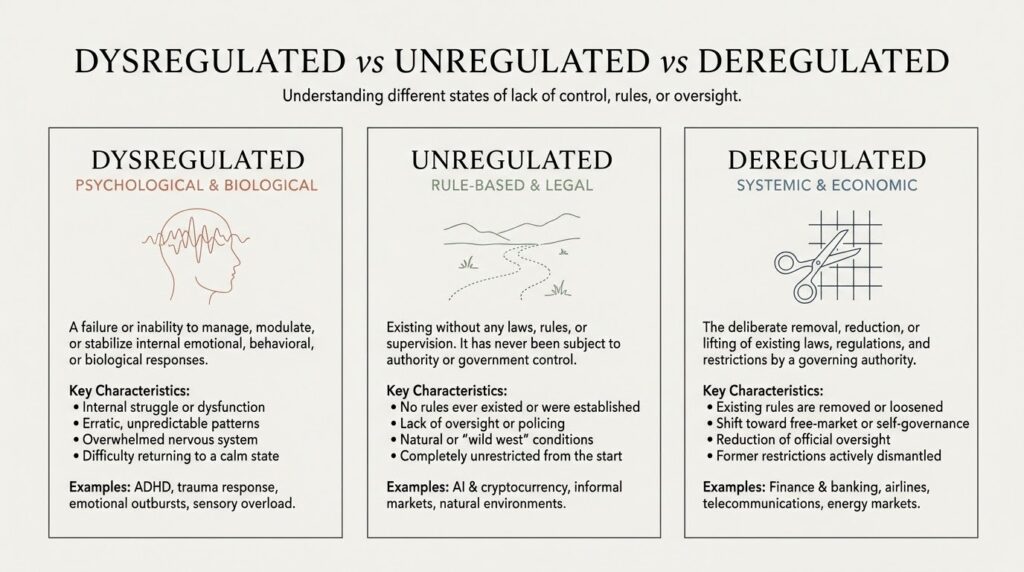
These three words look alike but mean different things. Mixing them up changes the meaning of a sentence.
| Word | Meaning | Common Area |
| Dysregulated | Poorly or abnormally regulated | Health, emotions |
| Unregulated | Not controlled by rules or oversight | Law, business |
| Deregulated | Rules were removed on purpose | Government, industry |
Example Comparisons
Dysregulated
“His stress hormones were dysregulated after months of poor sleep.”
Unregulated
“The supplement market is largely unregulated.”
Deregulated
“The government deregulated the energy sector in the 1990s.”
How to Use Dysregulated Correctly in Writing
Use dysregulated when something is out of balance and cannot manage itself well. Pair it with a clear subject, such as emotions, the nervous system, or a child. Keep the tone calm and non-judgmental.
Correct Usage Examples
Clinical Writing
“The patient presented with a dysregulated stress response.”
Educational Context
“A dysregulated student may need a quiet space to reset.”
Parenting Content
“A dysregulated child needs comfort first, then lessons.”
Workplace Wellness
“Burnout can leave employees emotionally dysregulated.”
Incorrect Usage Examples
Wrong
- “He was disregulated after the meeting.”
- “The market is dysregulated by new laws.”
- “The site is dysregulated and has no rules.”
Better
- “He was dysregulated after the meeting.”
- “The market is deregulated after the new laws.”
- “The site is unregulated and has no rules.”
Common Spelling Mistakes
- Disregulated
- Dysregulatted
- Dysreguleted
- Disregulation (instead of dysregulation)
- Dysregulate mixed up with deregulate
A quick tip helps here. Remember “dys” in dysfunction. Dysregulation is also a kind of dysfunction.
How Therapists Use the Word Dysregulated
Therapists use it to describe a state, not a person. They say a client is “feeling dysregulated,” not “a dysregulated person.” This keeps the focus on what can change.
It also helps with treatment plans. Once a therapist names the problem, they can teach skills like grounding, breathing, and mindful awareness. The word brings clarity and removes shame.
A Real-World Example of Dysregulation
Imagine a parent who gets an angry email at work. Their heart races, and their hands shake. They snap at a coworker and then feel guilty.
That moment is dysregulation. The body went into alert mode, and the mind could not slow it down. Later, a walk and a few deep breaths bring the parent back to balance.
How People Regulate Emotions More Effectively
Regulation is a skill. It can be learned and improved with practice. Small daily habits make a real difference.
- Take slow, deep breaths
- Name the feeling out loud
- Go for a short walk
- Limit caffeine when stressed
- Sleep at regular times
- Talk with a trusted person
- Write your thoughts in a journal
Therapy methods such as CBT and DBT also teach strong regulation skills.
Co-Regulation: The Overlooked Concept

Co-regulation means calming down with the help of another person. A steady, kind presence helps your nervous system settle. Babies learn this first from caregivers.
Adults need it too. A hug, a calm voice, or simply sitting with a friend can lower stress. Safe relationships are one of the best tools for emotional balance.
How Chronic Stress Creates Dysregulation
Short stress is normal. Long stress is different. When stress never stops, the body keeps pumping stress hormones.
This wears down sleep, mood, digestion, and focus. Over time, the system loses its ability to reset. Rest, boundaries, movement, and support help rebuild it.
Dysregulation in Children
Children are still learning to manage big feelings. Their brains are not fully developed. So meltdowns, tears, and anger are common.
Dysregulated Child
A dysregulated child may scream, hit, run away, or shut down. This is a sign of distress, not bad behavior. Stay calm, keep your voice low, and offer comfort. Teach skills later, once the child feels safe.
Here is how the main causes compare.
| Cause | Example |
| Tiredness | Missed nap or late bedtime |
| Hunger | Low blood sugar before meals |
| Overstimulation | Loud, crowded places |
| Big changes | New school or move |
Dysregulation and ADHD
Many people with ADHD struggle with emotional control. Feelings come fast and strong. Frustration, boredom, and rejection can hit hard.
Therapy, routines, and sometimes medication can help. The right word for this struggle is dysregulation.
Dysregulation and Autism
Autistic people may feel overwhelmed by noise, light, or change. This can lead to meltdowns or shutdowns. These are not tantrums. They are signs of sensory and emotional overload.
Quiet spaces, clear routines, and sensory tools can reduce distress. Support should respect the person’s needs.
Why Word Accuracy Matters in Mental Health
Correct words build trust. They help patients, parents, and teachers understand each other. A wrong term can confuse readers or weaken credibility.
Accurate language also supports search and research. People who look up “dysregulated meaning” should find clear, correct answers. Good wording leads to better care and better awareness.
Related Search Terms Explained
People search for this topic in many ways. Here are the most common phrases, answered in short.
Dysregulated Meaning
Dysregulated means out of balance or poorly controlled. It can describe feelings, body systems, or habits.
Dysregulated Emotions Meaning
Dysregulated emotions are feelings that are hard to manage. They may be too strong, too fast, or too long. The person often feels out of control in the moment.
Dysregulation vs Disregulation
Dysregulation is the correct noun. Disregulation is a misspelling. Both come from the same idea, but only the “dys” form is accepted in health and science.
Disregulated or Dysregulated
The answer is dysregulated. If you see “disregulated,” it is almost always an error.
Dysregulated or Disregulated
Choose dysregulated every time. This is true in school papers, blogs, medical notes, and everyday talk.
Dysregulated vs Unregulated
Dysregulated means something is not working in balance. Unregulated means nothing controls it, such as no rules or no oversight. One is about function. The other is about control.
Unregulated vs Dysregulated
Here is a quick way to compare them.
| Question | Unregulated | Dysregulated |
| Is it about rules? | Yes | No |
| Is it about balance? | No | Yes |
| Used for people’s feelings? | Rarely | Often |
| Example | An unregulated market | A dysregulated mood |
Is It Dysregulated or Deregulated
Use deregulated when rules or laws are taken away. Use dysregulated when a body or mind is out of balance. A government can deregulate an industry. A stressed person becomes dysregulated.
Dysregulated vs Disregulated ADHD
People with ADHD often face emotional dysregulation. The correct term is dysregulated. “Disregulated ADHD” is a misspelling and should be avoided.
Dysregulated vs Disregulated Child
For children, use “dysregulated child.” It describes a child who is struggling to calm down. It does not label the child as bad.
Quick Reference Cheat Sheet
| Term | Correct? | Meaning |
| Dysregulated | Yes | Out of balance or poorly regulated |
| Dysregulation | Yes | The state of being dysregulated |
| Disregulated | No | A common misspelling |
| Disregulation | No | A common misspelling |
| Unregulated | Yes | Not controlled by rules |
| Deregulated | Yes | Rules were removed |
Quick tips to remember:
- Use “dysregulated” for health and emotions.
- Use “unregulated” for missing rules.
- Use “deregulated” for removed rules.
- Treat “disregulated” as a typo.
Frequently Asked Questions
Is it dysregulated or disregulated?
The correct word is dysregulated. Disregulated is a common misspelling and is not used in medical writing.
What does dysregulated mean?
Dysregulated means poorly regulated or out of balance. It is used for emotions, the nervous system, hormones, and body functions.
What is a dysregulated nervous system?
It is a nervous system that stays stuck in stress or shutdown. It struggles to return to a calm and balanced state.
What does dysregulated emotions mean?
It means having trouble managing feelings. Reactions may be too intense, too long, or hard to calm.
What is the difference between dysregulated and unregulated?
Dysregulated means poorly balanced, often in health. Unregulated means no rules or oversight to control something.
Is it dysregulated or deregulated?
Use dysregulated for something out of balance. Use deregulated when rules or laws were removed.
What is a dysregulated child?
A dysregulated child cannot manage big feelings at the moment. They may cry, shout, or shut down and need calm support.
Final Thoughts
Dysregulated is the correct word for anything that is out of balance, whether it is emotions, the nervous system, hormones, or the immune system. Disregulated is a common spelling mistake and should be avoided. Knowing the difference between dysregulated, unregulated, and deregulated also keeps your writing clear.
Dysregulation is not a weakness. It is a sign that a system needs support. With good habits, safe relationships, and professional help when needed, balance can return. Use the right word, and you help spread clear and kind understanding.

Reyansh is a passionate English language and grammar writer who enjoys making grammar, spelling, vocabulary, and writing concepts simple and easy to understand. With a focus on clear explanations and practical examples, Reyansh creates helpful content for students, writers, and everyday English learners. His goal is to make learning English more enjoyable, useful, and accessible to everyone.